Battery storage for business in 2026: what's actually changed
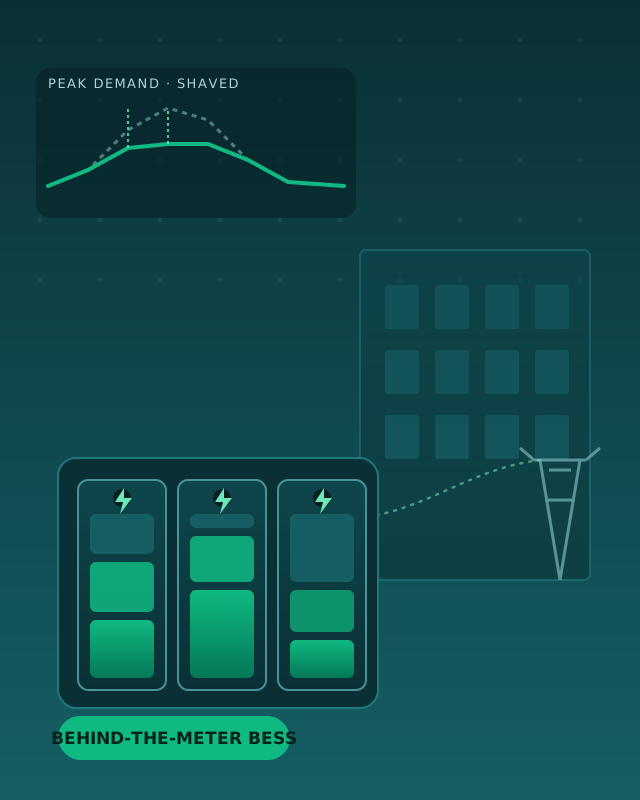
Commercial battery storage — a behind-the-meter battery energy storage system (BESS) — lets a UK business store electricity and use it when it is most valuable. We design commercial and industrial battery storage systems sized from your half-hourly data, and unlike an energy supplier or a battery manufacturer we are independent and supplier-neutral: we show the £/kWh cost and payback upfront. Here is how commercial energy storage stacks up in 2026.
For most of the last decade, a commercial battery was hard to justify on cost alone. That has changed. Installed costs for commercial-scale battery energy storage have fallen from around £800 per kWh in 2020 to roughly £200–£450 per kWh in 2026, dropping towards £140–£240/kWh for larger containerised systems. At the same time, business electricity has become both more expensive and more volatile, and the grid-flexibility markets that pay batteries to help balance the system have widened. The result is that a behind-the-meter battery now stands on its own commercial feet, with no subsidy — something that simply wasn't true a few years ago.
How the savings stack up
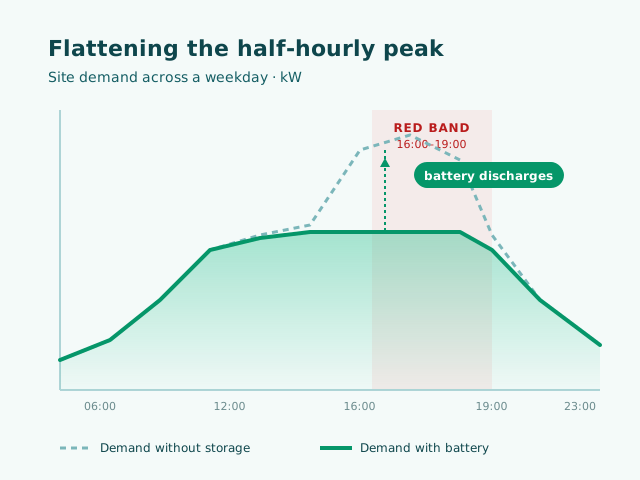
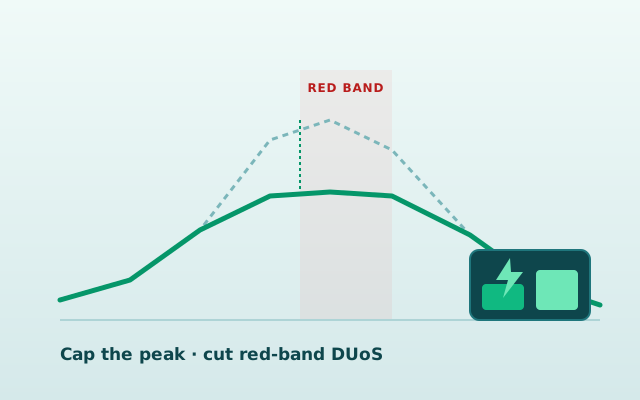
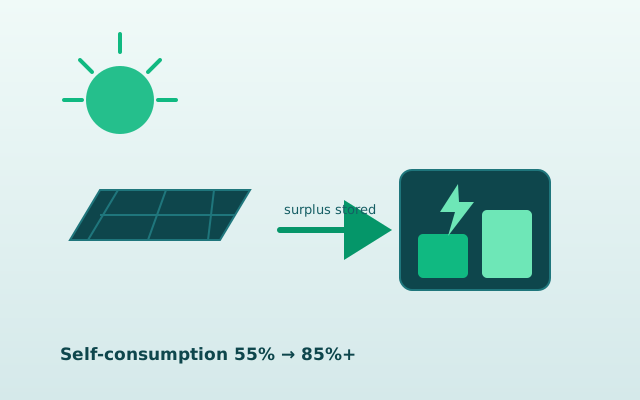
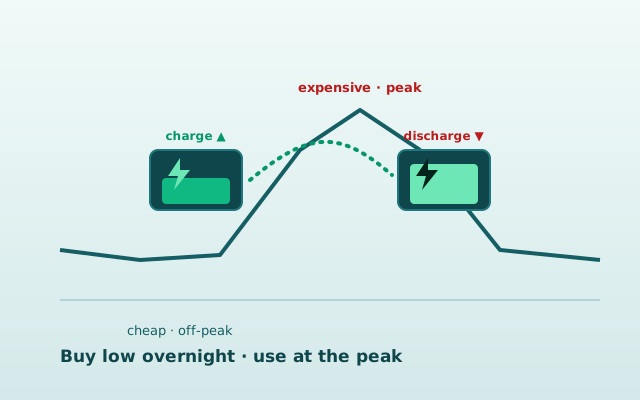
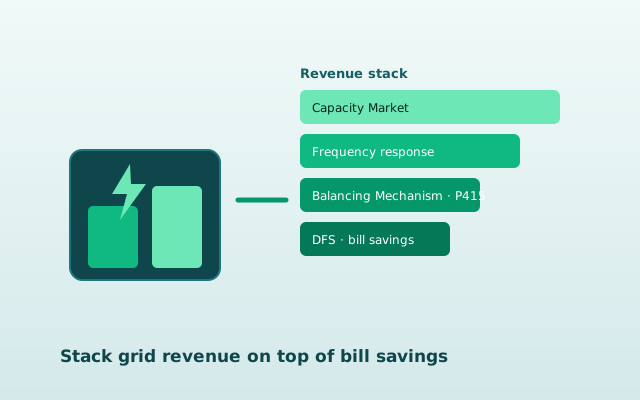
A well-designed system rarely relies on one saving. It shaves your weekday peak to cut red-band DUoS charges and the most expensive units; it charges on cheap overnight power and discharges into the daytime peak (energy arbitrage); if you have solar, it lifts self-consumption from around 55% to 85%-plus, turning low-value export into avoided import; and on larger sites it earns grid-flexibility revenue. Most businesses see a 10–30% cut in their electricity bill before any market revenue is counted. We work out which streams apply to your site from your half-hourly data — see our cost and payback guide for worked numbers.
The tax and VAT position — and what competitors get wrong
Two facts are routinely stated incorrectly elsewhere, so it's worth being precise. First, capital allowances: battery storage is plant and machinery and qualifies for the Annual Investment Allowance — 100% of the cost deducted against profits in year one, up to the permanent £1m cap. Batteries are a "special-rate" asset, so they do not qualify for 100% Full Expensing; for spend above £1m, a 50% First-Year Allowance applies. Second, VAT: the 0% VAT relief on battery storage applies only to domestic and qualifying charitable buildings. Commercial installations are standard-rated at 20% — but any VAT-registered business recovers that in full, so the effective cost is the net figure. We quote both gross and net so there are no surprises.
Sizing, safety and the grid connection
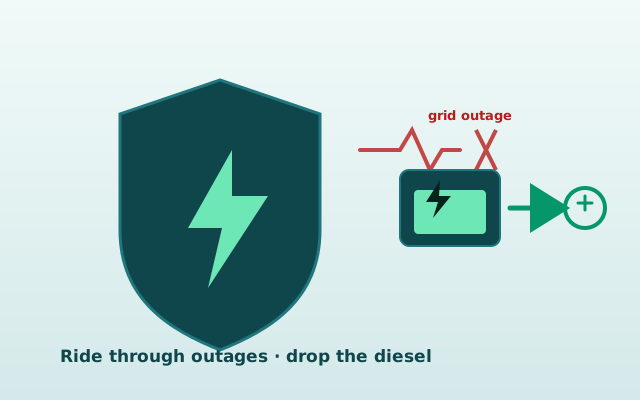
Commercial battery sizing is driven by two numbers read from your load: power (kW), set by how much peak you want to remove or back up, and energy (kWh), set by how many hours that power must run. Modern systems use lithium iron phosphate (LFP) cells — chosen for thermal stability and cycle life — run at 88–92% round-trip efficiency, and are warranted for 6,000–10,000 cycles. Every install is designed to the IET Code of Practice for Electrical Energy Storage Systems, with your insurer engaged before energisation. The grid connection (a G99 application to your DNO) is usually the longest item in the programme, so we submit it early. If your connection is already constrained, that's often a reason to install a battery — not a blocker — because it lets you draw more power on site during peaks without a costly reinforcement.
Specialists we work alongside
Storage rarely lands on its own. Most of the sites we model also involve an electrical contractor, a finance route or an existing solar array, so it is worth knowing who does what well. For installation across the East Midlands we work with commercial solar and battery storage across Leicestershire, while ElectriFusion Solutions covers the Doncaster corridor. In South Yorkshire, solar battery storage in South Yorkshire is handled by a team we rate, and Yorkshire sites often go to domestic battery storage installers in Yorkshire where the project is residential rather than commercial.
One structural point worth making before you size anything: a battery earns most when the building around it is treated as a single system rather than a set of separate purchases. Occupancy hours, roof orientation and how much load is already met on site change the answer more than the cell chemistry does — the wider view of renewable energy for commercial buildings is a reasonable place to start if the storage question is really a whole-building question.
Two more worth a look if your project sits outside commercial storage. Crafted Electrics takes on the smaller electrical works that often sit alongside a battery install, and home battery storage installation is the right route when the site is a house rather than a business. Scottish sites frequently route to commercial battery storage in the Central Belt. If the blocker is capital rather than engineering, read up on financing commercial battery storage before you commit to a purchase route.
If you want the numbers for your own site, the fastest route is a free desk feasibility: send us a year of half-hourly data and we'll model the system, the value streams, and an honest payback within 7 working days.